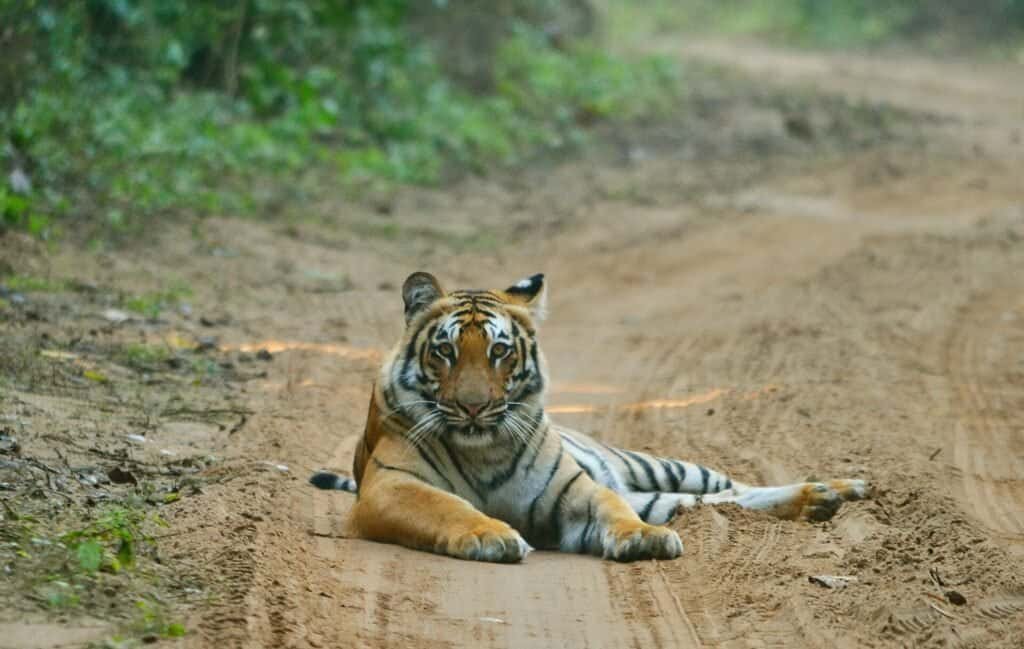
Jim Corbett National Park is one of the best places in the world to see a wild Bengal tiger. The 2022 All-India Tiger Estimation counted 260 tigers in Corbett Tiger Reserve, the highest number of any tiger reserve in India. Even so, a sighting is never guaranteed. This guide explains how many tigers live here, why the park matters so much, and how to give yourself the best chance of seeing one.
How many tigers are in Jim Corbett?
The 2022 tiger census put Corbett’s population at 260+, within a reserve of roughly 1,288 km². That makes it one of the densest tiger populations anywhere. India as a whole recorded about 3,682 tigers in the same estimation. Numbers are counted every four years using camera traps, so the next official figure will come from the 2026 cycle.
Why Corbett matters for tigers
Corbett was established in 1936 as India’s first national park, then called Hailey National Park, and was later renamed after Jim Corbett, the hunter-turned-naturalist who helped create it. In 1973 it became the launch site of Project Tiger, India’s national tiger conservation programme. Decades of protection, village relocation from core areas and strong prey populations are why tiger numbers here are so high today. Read more on our about page.
Best zones to see tigers in Corbett
- Bijrani: sal forest and grassland clearings just outside Ramnagar; private jeep safaris. One of the two strongest zones for tigers. Bijrani guide.
- Dhikala: wide grasslands along the Ramganga reservoir; canter safari or overnight stay. The other top zone. Dhikala guide.
- Jhirna and Dhela: tigers are present and seen, especially in summer, though less often than in the two top zones. Jhirna guide.
Compare the main zones in our guide to choosing a safari zone.
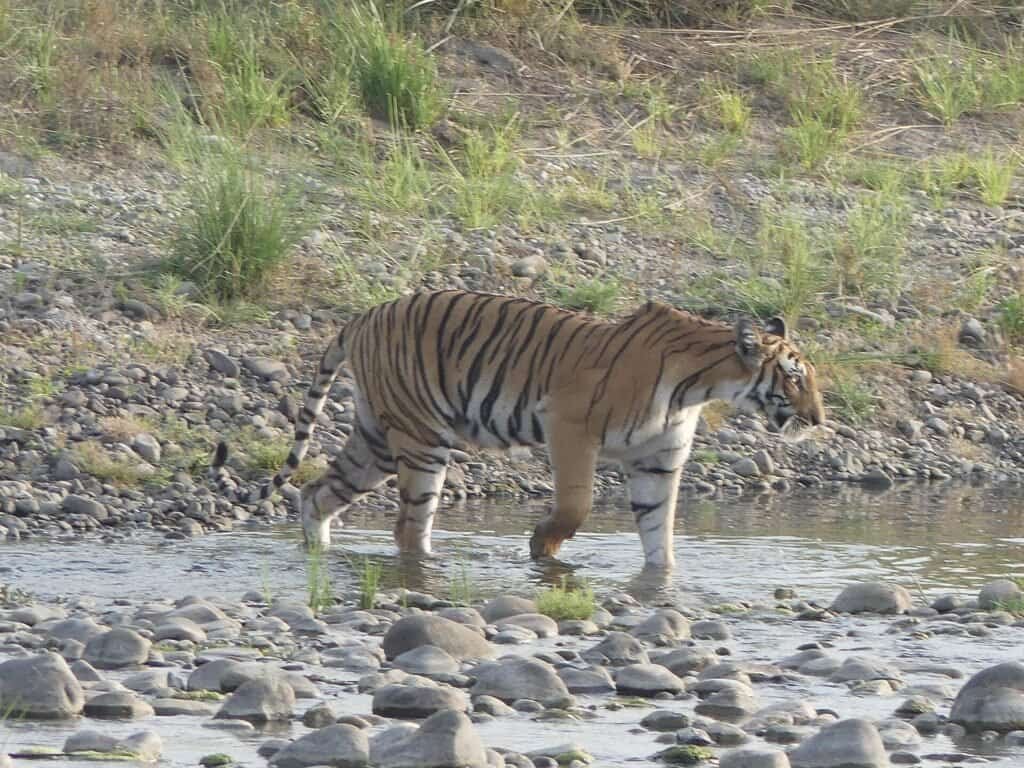
Best time to see tigers in Corbett
March to mid-June gives the strongest odds. Grass dries out and thins, water sources shrink, and tigers and their prey gather around the remaining pools and streams. Early mornings are usually the most active time, though afternoon shifts in summer can be excellent as animals come to drink. Winter (November–February) is cooler and lovely, but tall grass and thick forest make tigers harder to spot. See the best time to visit Jim Corbett.
What are your real chances?
Honest answer: on a single shift, a tiger sighting is far from certain, even in the best zones. Your odds rise with every extra shift you book. Visitors who take three or four shifts across Bijrani and Dhikala in summer have a much better chance than those who take one. Corbett is also a dense forest park, not an open plain, so many sightings are brief. Go for the whole forest experience, with elephants, deer, birds and the landscape, and treat a tiger as a bonus.
How to improve your odds
- Book multiple shifts, ideally in Bijrani and Dhikala.
- Visit between March and mid-June if tigers are the priority.
- Listen: chital, sambar and langur alarm calls often mean a tiger or leopard is close.
- Stay quiet and patient; jeeps that wait often see more than jeeps that rush.
- Choose an experienced driver and guide, and tell them tigers are your priority.
Tiger safety and etiquette
Always stay inside the vehicle, keep at least 30 metres from wildlife and never block an animal’s path. No flash photography, no shouting and no feeding. These rules protect both the tigers and you. Our visitor rules list the full code of conduct.
Other big cats and predators
Leopards also live throughout Corbett and are sometimes easier to see than tigers in rocky or hilly areas. Corbett is also home to smaller cats such as the jungle cat and leopard cat, plus sloth bears and jackals. See our wildlife page.
Frequently asked questions
The 2022 All-India Tiger Estimation counted 260 tigers in Corbett Tiger Reserve, the highest of any tiger reserve in India.
Bijrani and Dhikala are the two zones most consistently cited for tiger sightings. Bijrani runs private jeep safaris; Dhikala uses the shared canter or an overnight stay.
April and May are usually the best months, as part of the March to mid-June dry season when tigers gather near water.
No. Corbett has a high tiger density, but sightings depend on luck, season and the number of safaris you take. Booking several shifts improves your chances.
Source: Jim Corbett National Park (Wikipedia). Population figures from the 2022 All-India Tiger Estimation.