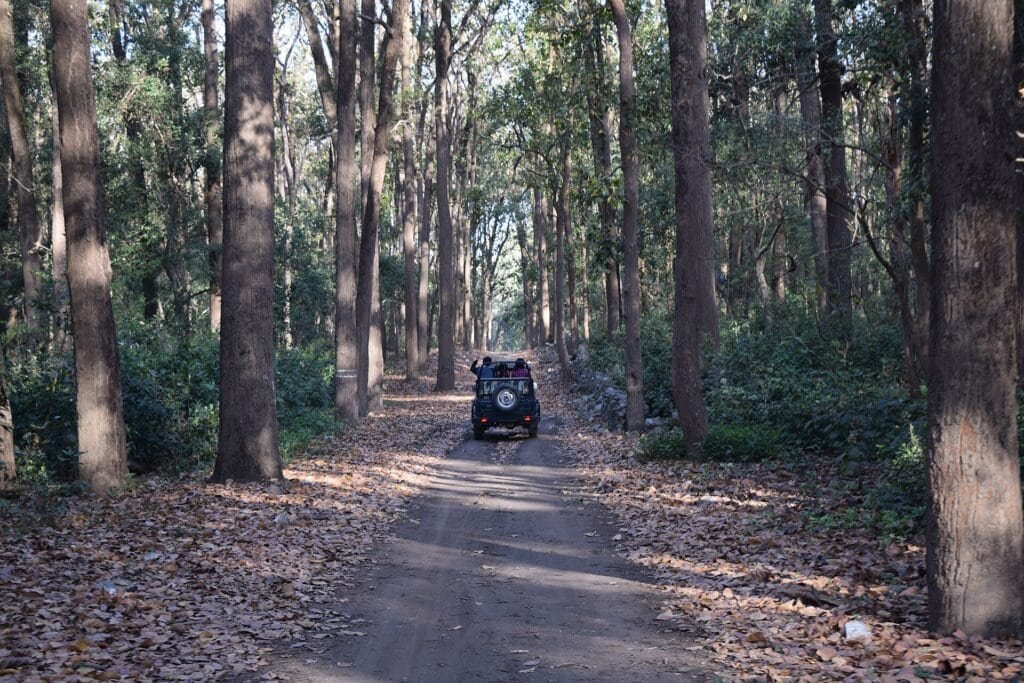
Jhirna is the Jim Corbett safari zone that never closes. While Dhikala, Bijrani and three other zones shut for the monsoon, Jhirna keeps running jeep safaris year-round, which makes it the go-to zone for travellers visiting between July and mid-November. It is also a strong choice in peak season when Bijrani is sold out, with dependable elephant sightings and a real chance of tiger and sloth bear.
Jhirna zone at a glance
- Entry gate: Dhela Gate, on the southern side of the reserve, roughly 16–20 km from Ramnagar.
- Vehicle: private jeep (Gypsy).
- Shifts: morning and afternoon.
- Season: open year-round. Heavy rain can still cause short closures.
- Best for: monsoon visits, elephant herds, sloth bear, a fallback when Bijrani is full.
Landscape
Jhirna sits on the southern edge of Corbett. Its forest is drier and more open than Bijrani’s, with mixed sal and other deciduous trees, scrub and grassland patches. Parts of the zone were once village land that was relocated out of the reserve, and the old fields have turned into grassland that now attracts deer and the predators that follow them.
Wildlife in Jhirna zone
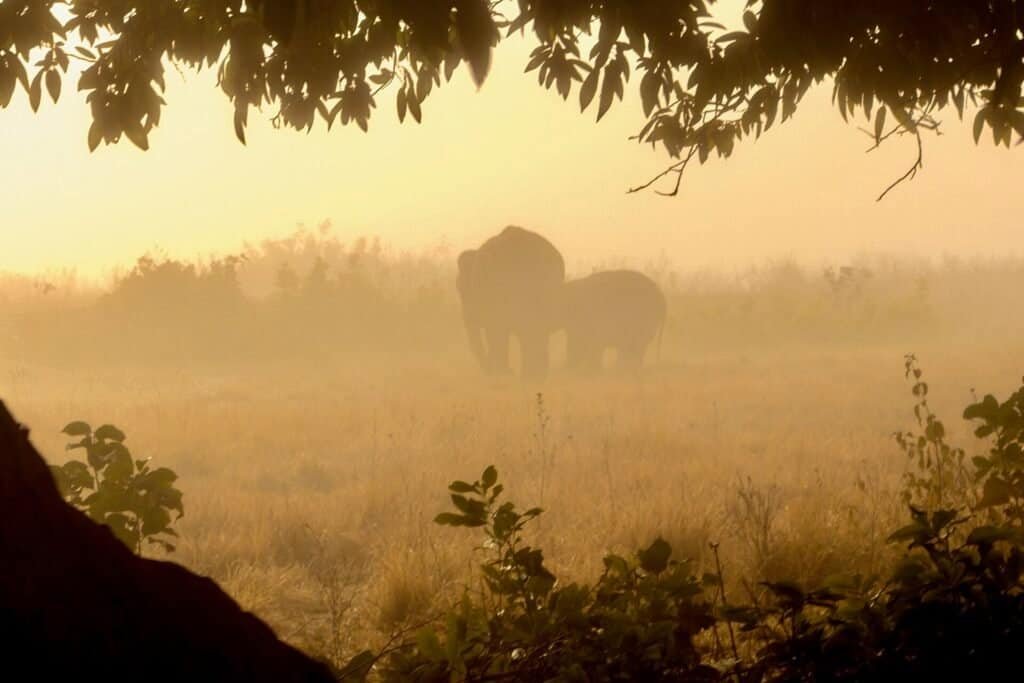
- Asian elephant: some of the most reliable herd sightings in the park.
- Sloth bear: Jhirna is one of the better Corbett zones for this shy species.
- Big cats: tiger and leopard are present, though sightings are less frequent than in Bijrani or Dhikala.
- Deer and others: chital, sambar, barking deer, wild boar.
- Birds: peafowl, junglefowl, parakeets and raptors; birding is good year-round.
Jhirna in the monsoon
July to mid-November is the only time most of Corbett is closed, and Jhirna becomes the main way to see the park. The forest is at its greenest, dust is gone, crowds are thin and permits are easy to get. The trade-off is weather: rain can make tracks muddy, sightings can be harder in thick vegetation, and very heavy downpours can cancel individual shifts. If you are travelling in these months, read our monsoon guide first.
Jhirna vs. Dhela vs. Bijrani
- Jhirna vs. Bijrani: Bijrani usually has better tiger odds and is closer to Ramnagar. Jhirna is open all year and is easier to book.
- Jhirna vs. Dhela: the two zones sit side by side on the southern edge. Dhela is newer, with shorter routes and a calmer pace; Jhirna is larger and more established.
Compare the main zones in our guide to choosing a Corbett safari zone.
How to book a Jhirna safari
Jhirna permits are booked through the Uttarakhand Forest Department’s official booking portal, one permit per jeep per shift. Indian nationals can generally book 45 days ahead and foreign nationals 90 days ahead. Outside peak season you can often book with short notice. See Jim Corbett timings and entry fees for current shifts and costs.
Tips for the Jhirna zone
- In the monsoon, wear quick-dry clothing and bring a rain cover for your camera.
- In summer, the afternoon shift can be very hot; morning is more comfortable.
- Ask your driver to check elephant-crossing points by the streams; herds are often seen there.
- Hotels along the Ramnagar–Kashipur side reduce the drive to the gate. See our where to stay guide.
Frequently asked questions
Yes. Jhirna is one of three Corbett zones, with Dhela and Sitabani, that stay open year-round, including the monsoon. Individual shifts can still be cancelled in very heavy rain.
Tigers live in Jhirna and are seen there, but sightings are less frequent than in Bijrani or Dhikala. Jhirna is stronger for elephants and sloth bear.
The Jhirna entry gate is on the southern side of the reserve, roughly 16–20 km from Ramnagar town, about a 30–40 minute drive.
Yes, especially when Bijrani and Dhikala are sold out. It is quieter, easier to book and good for elephants and birds.
Source: Jim Corbett National Park (Wikipedia). Rules and tariffs are set by the Uttarakhand Forest Department and change periodically.