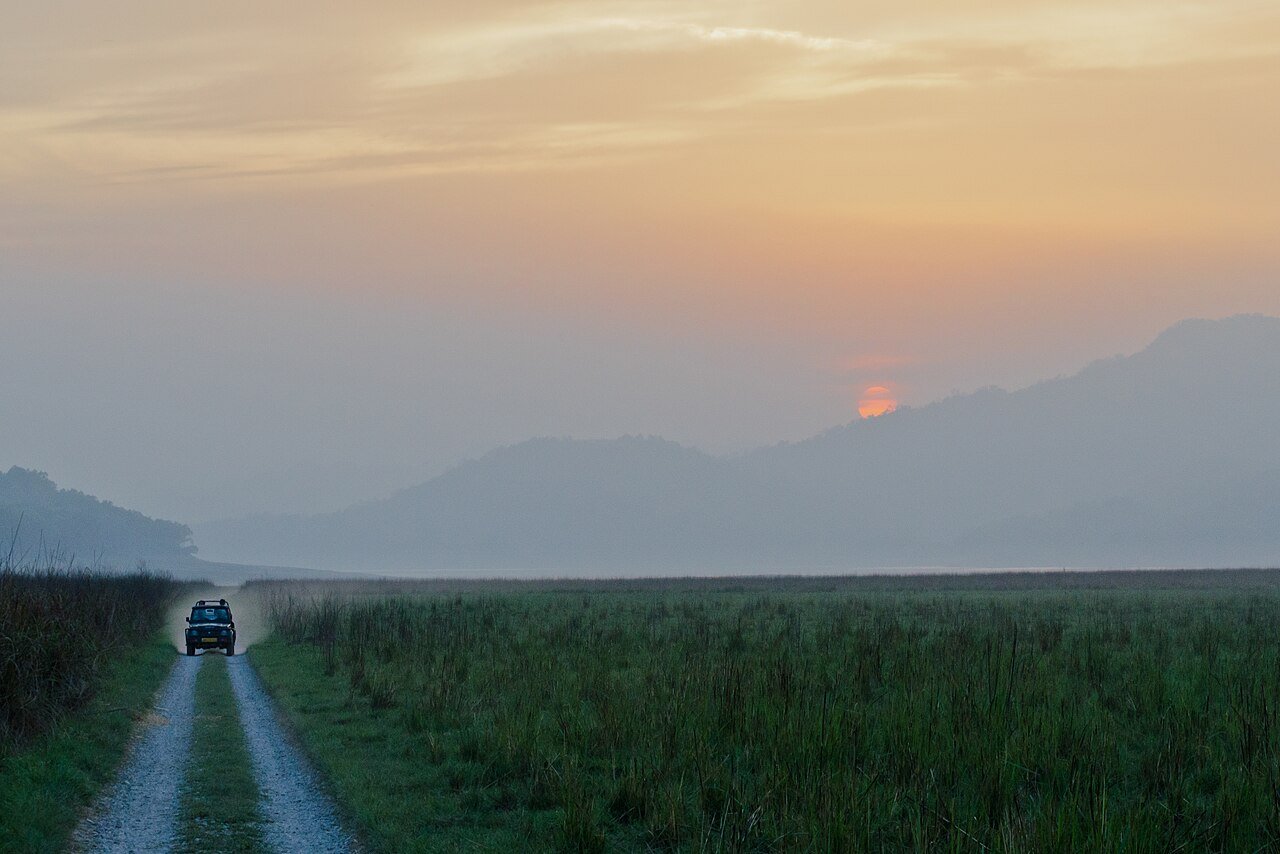
The best time to visit Jim Corbett National Park is mid-November to February, for comfortable weather and strong birdlife. March to mid-June gives the highest tiger-sighting odds instead. Avoid July–October unless you choose Jhirna, Dhela or Sitabani. These are the only three of Corbett’s eight safari zones that stay open through the monsoon closure. Each season trades off comfort, tiger odds and zone availability differently. The right pick depends on what matters most for your trip.
Winter (mid-November – February): comfortable, scenic, birder-friendly
Daytime temperatures sit in a comfortable range for game drives. Mornings turn cold, dipping near 5°C in December and January. Pack a proper jacket for the open jeep or canter. This is peak season for migratory birdlife, on top of the park’s 580+ resident and migratory species. It’s the strongest single window for a dedicated birding trip. See our birdwatcher’s guide for zone-by-zone detail. The trade-off is popularity: permits for Bijrani and Dhikala, Corbett’s two most tiger-reliable zones, sell out fastest in this window. Fog can also delay morning gate times by 10–15 minutes between December and February.
When is the best time to see a tiger in Jim Corbett?
March through mid-June gives the strongest tiger-sighting odds. The dry season concentrates tigers and prey species around the reserve’s shrinking water bodies. Thinning grass cover also makes them easier to spot from the vehicle. Bijrani and Dhikala remain the two zones visitors most consistently cite for sightings in this window. Bijrani offers a mix of dense sal forest and grassland clearings close to Ramnagar. Dhikala covers the reservoir grasslands of the Patli Dun valley, reachable only by the shared Canter safari. The cost is heat: daytime temperatures can approach 40°C by May. Early-morning shifts are markedly more comfortable than afternoon ones in this stretch.
Monsoon (July – October): only three zones open
Most of the reserve closes for the monsoon from roughly 1 July to 15 November. That includes Dhikala, Bijrani, Durga Devi, Garjia and Phato. Jhirna, Dhela and Sitabani are the only zones that stay open year-round. A Corbett safari is still possible in these months. Just plan around one of those three zones rather than assuming the whole park is shut. Jhirna sees the most consistent elephant-herd activity of the three and runs a normal jeep-safari schedule. That makes it the most straightforward monsoon choice for a first-time visitor. Our full monsoon guide covers what else stays open and what the trade-offs actually look like.
Corbett’s three seasons at a glance
- Winter (mid-Nov–Feb): coolest, best birdlife, busiest booking window; all 8 zones open.
- Summer (Mar–mid-Jun): hottest, strongest tiger-sighting odds; all 8 zones open.
- Monsoon (Jul–Oct): quietest and easiest to book; only Jhirna, Dhela and Sitabani open.
When should I book, and how far ahead?
Timing your visit is only half the plan. Timing your booking matters just as much. Indian nationals can generally book a permit online up to 45 days ahead of the visit date. Foreign nationals can book up to 90 days ahead, and must supply passport details at booking. In peak season (December–March), popular zones like Bijrani and Dhikala commonly sell out one to three weeks before the date. Book as early as your window allows, rather than waiting to firm up other travel plans. See the full FAQ for cancellation rules and what happens if your dates change.
Frequently asked questions
What is the best time of year to visit Jim Corbett?
Mid-November to February is cooler with better birdlife; March to mid-June gives the best tiger-sighting odds. Avoid July–October unless you’re visiting Jhirna, Dhela or Sitabani, the three zones that stay open through the monsoon.
When is Jim Corbett National Park closed?
The core zones close for the monsoon from roughly 1 July to 15 November. That’s Dhikala, Bijrani, Durga Devi, Garjia and Phato. Jhirna, Dhela and Sitabani stay open year-round. A Corbett safari is possible even in the monsoon if you pick one of those three zones.
Source: Jim Corbett National Park (Wikipedia). We cross-reference zone-specific details against this site’s own zone-by-zone comparison.