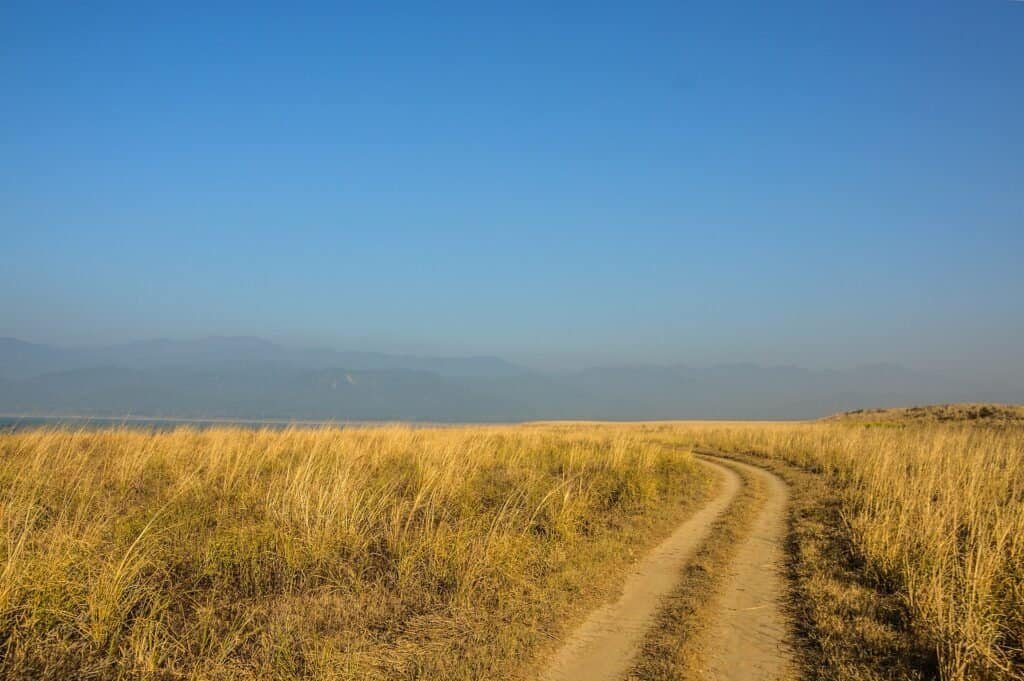
The best window for a first trip to Jim Corbett National Park in India is mid-November to February, when temperatures are comfortable and all the main safari zones are open. March to June is the hotter alternative, when animals gather near shrinking water. For zones, Bijrani suits a first safari, Jhirna is one of the few that stays open year-round, and Dhikala is the deeper, more immersive option.
Tigers are never guaranteed, so book more than one safari and arrange permits and stays well before you fly. Below you’ll find what makes the park distinctive, the wildlife you can realistically expect, a zone comparison, seasonal timing, and practical advice for international travellers, including visitors from the United States.
Key takeaways
- Best season: mid-November to February is the safest all-round window for a first visit.
- First-timer zone: Bijrani is the straightforward pick, right next to Ramnagar.
- Year-round options: Jhirna and Dhela generally stay open in the monsoon, weather permitting.
- Tiger odds: sightings are possible, never promised. Several safaris help.
- Book early: foreign nationals can book safari permits up to 90 days ahead, and Dhikala overnight stays sell out fast.
What makes Jim Corbett National Park different from other Indian tiger reserves?
Corbett is India’s oldest national park, and it is where the country’s tiger-conservation story began. It is also big on numbers: the 2022 national tiger estimate counted 260 tigers in Corbett Tiger Reserve, the most of any reserve in India, and more than 580 bird species have been recorded here.
Where in Uttarakhand is it?
The park sits in the Himalayan foothills of Uttarakhand, mainly in Nainital district, and parts of the wider Corbett Tiger Reserve extend into Pauri Garhwal. Ramnagar is the main gateway town, where most safari gates and hotels are. Expect a mix of landscapes: the Ramganga river, sal forest, open grassland and riverine belts. That variety is why the zones feel so different.
History worth knowing
The park opened in 1936 as Hailey National Park, India’s first national park. After independence it was briefly called Ramganga National Park, then renamed in the 1950s after Jim Corbett, the hunter turned writer and conservationist. India’s Project Tiger was launched here on 1 April 1973. Read more on our about page.
What “Corbett Tiger Reserve” means on an itinerary
The national park is the core of the larger Corbett Tiger Reserve, which also includes the Sonanadi Wildlife Sanctuary. Booking pages often use the two names loosely, but zones, gates and access rules differ, so check exactly which zone and gate your permit covers. Our guide to Corbett’s gates lists them all.
What wildlife can you see in Corbett?
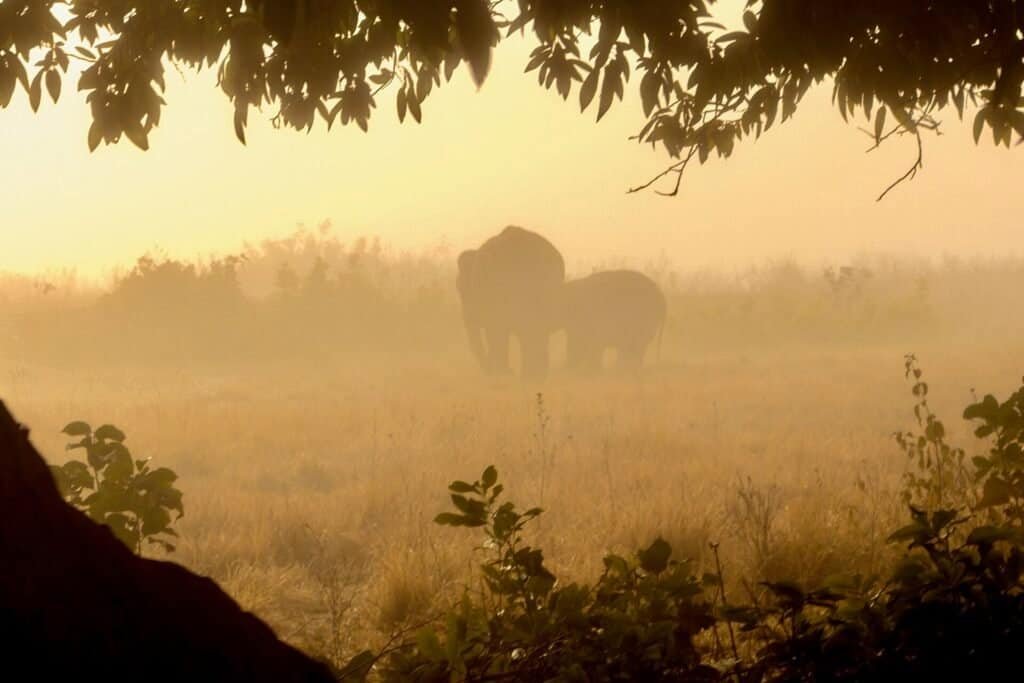
Elephants, chital and sambar are generally easier to find than tigers. Tigers are possible, but plan as if they’re a bonus.
Which animals do visitors encounter?
Common sightings include Asian elephants, chital (spotted deer), sambar, hog deer, barking deer, wild boar, grey langurs and rhesus macaques. Leopards and sloth bears are present but seen less often. See our wildlife page for more.
Gharial, crocodiles and birdlife
Along the Ramganga you can look for the Indian gharial and mugger crocodiles, plus otters. The park’s 580+ resident and migratory bird species include hornbills, Indian peafowl and crested serpent eagles. Birders do best in Durga Devi zone and around Dhikala. Our birdwatcher’s guide has the details.
How to think about tiger odds
Tigers use dense cover, so a sighting is never guaranteed. Your odds improve with every extra safari, with the March to June dry season (when animals gather near water), and with the two strongest zones, Bijrani and Dhikala. Be wary of any operator that promises a percentage. Our guide to tigers in Jim Corbett explains realistic odds.
Which safari zone fits your trip: Dhikala, Bijrani or Jhirna?
Pick Bijrani for a first safari, Jhirna for flexible dates, and Dhikala for a longer, wilder stay. Corbett runs more than eight tourism zones across the reserve, and these three are the headline options.
How the three headline zones compare
| Zone | Usual season | Best for | Trade-off |
|---|---|---|---|
| Dhikala | 15 November to 15 June | Deepest immersion; grassland and Ramganga reservoir scenery | Day visitors use the shared canter; overnight stays need early booking |
| Bijrani | 15 October to 30 June | A straightforward first safari near Ramnagar | Closed in the monsoon; sells out fast in peak season |
| Jhirna | Year-round, weather permitting | Flexible dates, including the monsoon | Tiger sightings less frequent than Bijrani or Dhikala |
Dhela, next to Jhirna, is also open year-round. Garjia follows Bijrani’s season (15 October to 30 June), while Durga Devi, Sonanadi and Pakhro run from about 15 November to 15 June. Dates and access can change, so confirm all zone details against current park notices. Our full zone comparison covers every option.
Choosing between the zones
A short trip and a first safari point to Bijrani. A flexible season points to Jhirna. A longer stay and a wilder feel point to Dhikala. Weigh your season, your zone and the number of safaris you can fit in together.
When is the best time to visit Corbett, and which zones close?
Mid-November to February is the best all-round window. Most zones close for the monsoon from about 1 July, and reopen on 15 October (Bijrani, Garjia) or 15 November (Dhikala, Durga Devi).
Why mid-November to February is the safest window
Temperatures are pleasant, visibility is generally good, and all the main zones are open. Dhikala and Durga Devi open on 15 November, so early November is a little early for them. Early-morning open-jeep rides are cold, so pack layers. See our best time to visit guide and the month-by-month weather.
Is the hot season from March to June worth it?
Yes, if you can handle the heat. Animals gather near shrinking water, which improves your odds, but daytime temperatures run very high by May. Choose early-morning shifts and bring sun protection.
What happens during the monsoon?
From July, heavy rain can damage tracks and create flood risk, so most zones close. Jhirna and Dhela are among the few options that stay open year-round, though individual shifts can be cancelled in very heavy rain. Read what’s open in the monsoon before you book.
How do you plan permits, stays and travel from abroad?
Book permits first, choose your stay around your zone’s gate, and fly into Delhi. Start early, because popular dates sell out.
Steps to secure a safari permit
- Pick your dates and season.
- Pick your zone and shift (morning or afternoon).
- Book on the Uttarakhand Forest Department’s official portal, corbettonline.uk.gov.in. Foreign nationals can book up to 90 days ahead, Indian nationals 45 days.
- Enter every traveller’s name and passport details exactly as on the passport. Mismatches can cause problems at the gate.
- Carry the same passports on safari day.
For foreign nationals, a full jeep safari (permit, jeep and guide, up to six people) typically costs about ₹10,400–10,700. See our safari price guide and how permits work. Rules, quotas and fees change, so confirm on the official portal before you pay.
Phones are banned on safari
Since 5 February 2026, mobile phones have been banned on all Corbett safaris. You deposit them at the gate and collect them afterwards, so bring a camera if you want photos.
Choosing accommodation near the park
You can stay in Ramnagar, in resorts close to specific zone gates, or in forest rest houses inside zones such as Dhikala. Sleep near the gate you’ll use, because a hotel “near Corbett” isn’t necessarily near your zone’s entry. Compare areas in our guide to resorts in Jim Corbett.
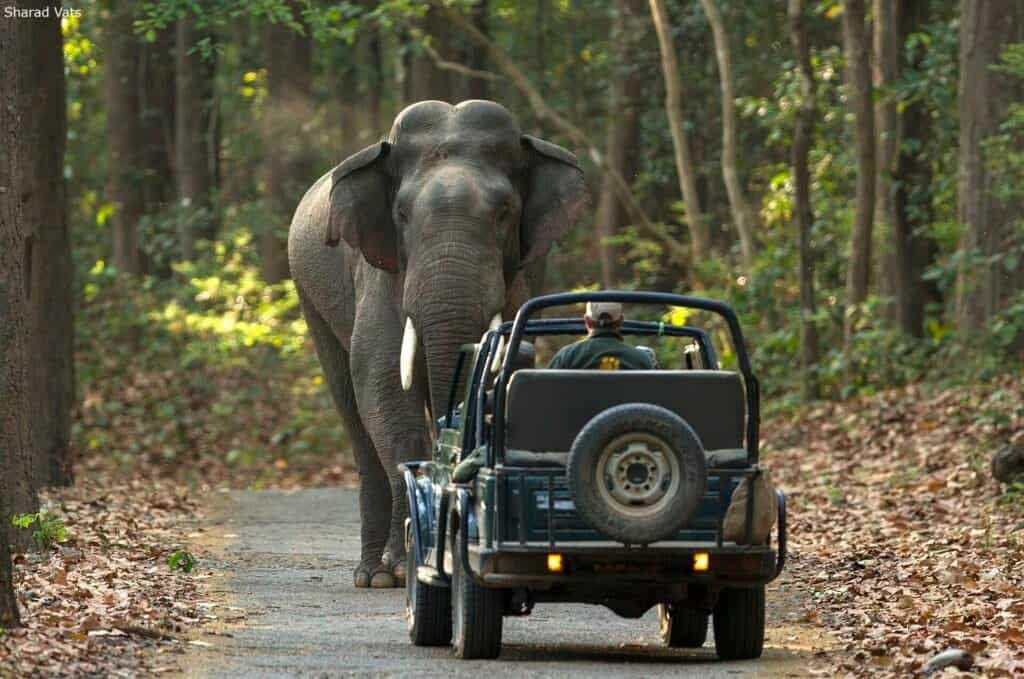
Dhikala needs the earliest planning. Its forest rest houses have very few rooms, and for foreign nationals they open for booking about 90 days ahead and often sell out within days. Our Dhikala Forest Rest House booking guide walks you through it.
Getting there from the US and how long to stay
Fly into Delhi (DEL), then continue to Ramnagar by road or rail. The drive is about 240–280 km, roughly six to seven hours, and the overnight Ranikhet Express train reaches Ramnagar early in the morning. See our full guide on how to reach Jim Corbett.
Plan at least three nights for two to three safaris, and build in a buffer for jet lag. US and other foreign visitors need a valid Indian visa; check current requirements on the Government of India’s official visa website before you travel.
Your next step for planning a Corbett safari
Decide in this order: season first, then zone, then permits and stay. That sequence keeps you from booking a lodge in a zone that’s closed on your dates.
Corbett offers excellent habitat, not guaranteed sightings. Several safaris and flexible expectations beat chasing one animal. Start with our zone guide and the complete Jim Corbett travel guide, and send us your dates if you have questions before you book flights.
Frequently asked questions
Plan at least three nights for two to three safaris. International visitors should build in a buffer for jet lag, and treat a tiger sighting as a bonus rather than a guarantee.
Foreign nationals need their passport details at booking and must carry the same passport on safari day. Every traveller’s details must match the permit exactly.
Book your safari permit first, then choose a stay near your zone’s gate. A hotel near Corbett isn’t necessarily close to the entry for your chosen zone.
Foreign nationals can book safari permits up to 90 days ahead on the official Uttarakhand Forest Department portal. Indian nationals can book up to 45 days ahead.
Pack warm layers for cold early-morning jeep rides from November to February, and sun protection from March to June. Bring binoculars and a camera, since phones are banned on safaris.