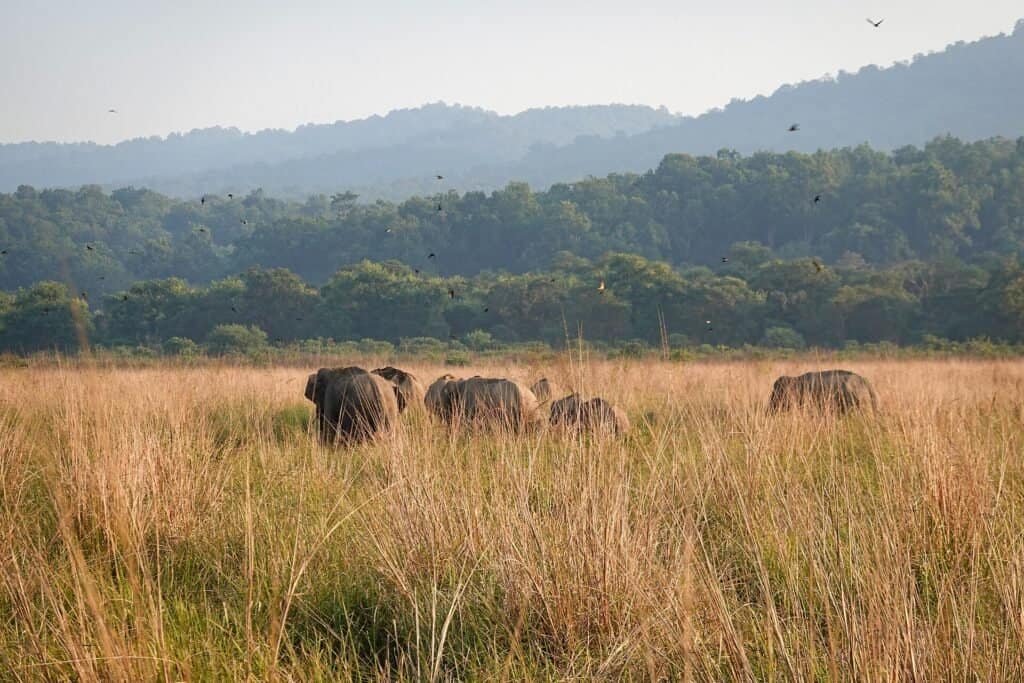
Dhikala is the largest, most famous and most sought-after safari zone in Jim Corbett National Park. It covers the broad grasslands and sal forest around the Ramganga reservoir in the Patli Dun valley, and it is where many visitors have their best tiger and elephant sightings. It also works differently from every other zone: day visitors can’t take a private jeep, and the best way to experience it is to stay overnight inside the park.
Dhikala zone at a glance
- Entry gate: Dhangarhi Gate, about 18–20 km north of Ramnagar on the Ranikhet road.
- Vehicle: shared canter (open 16-seat vehicle) for day visitors; private jeep only for guests with a Dhikala forest rest house booking.
- Season: 15 November to 15 June. Closed in the monsoon.
- Best for: tigers, elephant herds, grassland birds, long views and an overnight jungle experience.
What makes Dhikala special
Most of Corbett is forest, which means sightings come at short range and often disappear quickly. Dhikala is different. The chaurs (grasslands) along the Ramganga give long, open views, so you can watch a herd of elephants cross the river or a tiger walk the edge of the grass for minutes rather than seconds. The reservoir also draws mugger crocodiles, gharial, otters and huge numbers of water birds, especially in winter.
Dhikala also sits at the heart of Corbett’s history. The reserve was where Project Tiger was launched in 1973, and the old forest rest house at Dhikala has hosted naturalists for generations.
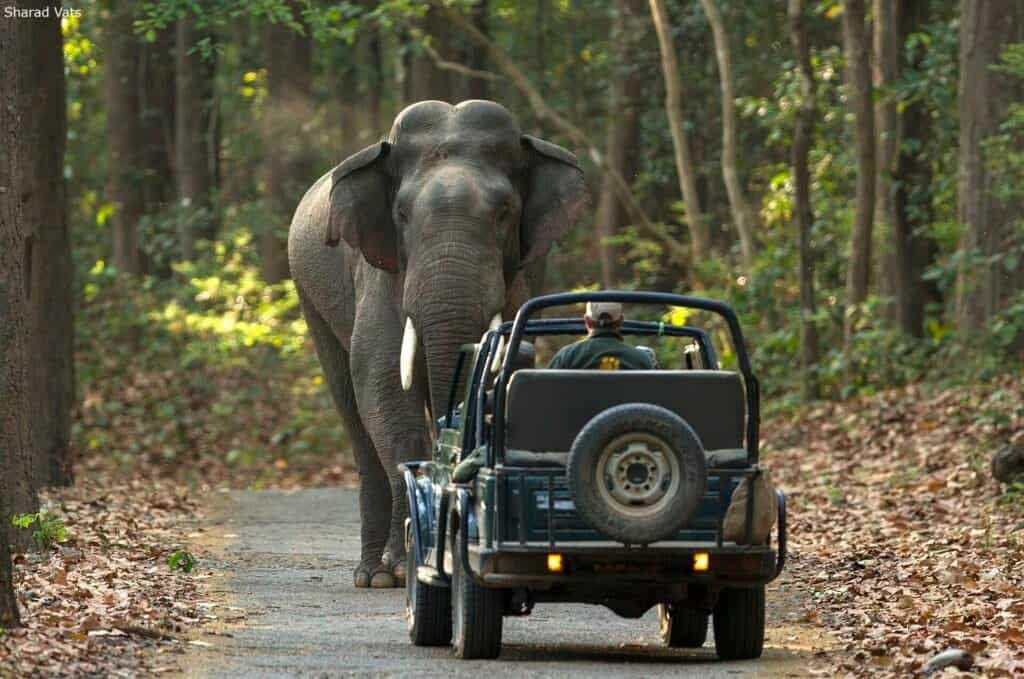
Canter safari vs. staying overnight
Canter safari (day visit). The canter is a shared, open-top vehicle that leaves on a fixed schedule and covers a long route into the zone. It is the cheapest way to see Dhikala and you book it per seat. The trade-off is less flexibility: you can’t stop where you like for as long as you like, and the group sets the pace. A canter seat typically costs roughly ₹2,000–2,600 per person for Indian visitors.
Overnight stay. Staying at the Dhikala forest rest house complex lets you take morning and afternoon safaris from inside the zone, so you are already in prime territory at first light instead of driving in from the gate. Evenings at Dhikala, with the sound of elephants and deer alarm calls across the grassland, are a highlight for many visitors. The zone has four forest rest houses (Dhikala, Gairal, Sultan and Sarapduli), all booked through the Uttarakhand Forest Department’s official portal. They sell out fast in peak season.
If you can get an overnight booking, take it. If not, a canter seat is still worth it for the landscape alone. See our where to stay guide for other options near the park.
Wildlife you can see in Dhikala
- Bengal tiger: Dhikala and Bijrani are the two zones most consistently cited for tiger sightings.
- Asian elephant: large herds along the Ramganga, especially in summer.
- Deer: chital, hog deer (a grassland specialist), sambar and barking deer.
- Reptiles: gharial and mugger crocodile in the river and reservoir, plus monitor lizards.
- Birds: raptors such as Pallas’s fish eagle and crested serpent eagle, plus waterfowl in winter.
Our wildlife page has more on each species.
Best time to visit Dhikala zone
Dhikala is open from mid-November to mid-June. November to February is cool, green and excellent for birds, but mornings are cold in an open canter, so pack warm layers. March to mid-June is hot, but tiger and elephant sightings peak as grass dries out and animals gather near water. For a full season-by-season breakdown, see the best time to visit Jim Corbett.
How to book Dhikala zone
Canter seats and Dhikala accommodation are booked through the Uttarakhand Forest Department’s official booking portal. Indian nationals can generally book 45 days ahead and foreign nationals 90 days ahead. Dhikala is the first zone to sell out, so have your dates and ID details ready the day bookings open. Read how Corbett safari permits work for the full process.
Practical tips
- Arrive at Dhangarhi Gate early with the original ID used for booking; late arrivals can be refused.
- Carry warm clothing in winter and plenty of water in summer.
- Mobile phones have been banned on all Corbett safaris since 5 February 2026 and must be deposited at the gate, so bring a camera if you want photos.
- Food options inside Dhikala are limited and basic; plan accordingly.
Frequently asked questions
Day visitors cannot. Dhikala is open to day visitors only by the shared canter safari. Jeep safaris in Dhikala are available only to guests staying overnight in one of the zone’s forest rest houses.
Dhikala is generally open from 15 November to 15 June and closes for the monsoon. Confirm the current season dates before booking.
Dhikala and Bijrani are the two zones most often cited for tiger sightings. Dhikala’s open grasslands give longer views, but no zone guarantees a sighting.
Dhangarhi Gate is about 18–20 km from Ramnagar, and the Dhikala complex lies deep inside the zone beyond it, so allow well over an hour from Ramnagar to reach the heart of the zone.
Source: Jim Corbett National Park (Wikipedia). Rules and tariffs are set by the Uttarakhand Forest Department and change periodically.